
KANSAS CITY, Mo. — Experience is hard to beat as a teacher, especially when you have skin in the game and face economic consequences. That’s why participation in the Hereford Feedout Programs continues to grow. Hereford breeders and commercial users of Hereford genetics can retain ownership in a few head of cattle and learn how a sampling of their genetics perform in the feedlot and on the rail with limited financial exposure. Juniors can do the same with a single head.
“You learn really fast about your health program at home and the genetics you have,” says Justin Miller, American Hereford Association (AHA) director of commercial programs. As a former feedlot manager and fed cattle buyer for one of the nation’s largest beef packers, he understands how valuable the knowledge is to both seedstock and commercial producers.
“If you want to understand the value of your cattle and how to improve your genetics and management for those who buy and feed your cattle, you can make huge strides by entering cattle in this program,” Miller says. “It’s an opportunity to dip your toes in the water and gain a wealth of knowledge for limited financial exposure.”
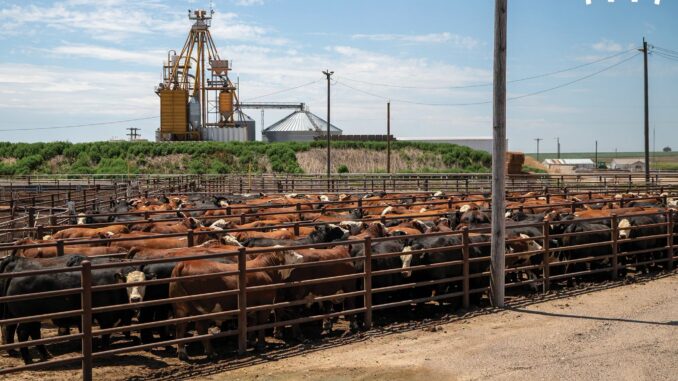
Broadly speaking, producers enter as few as five head of Hereford or Hereford-influenced steers or heifers into the program. Although, there is no limit, and they can enter entire pens if they want. All cattle are fed at HRC Feed Yards, LLC in Scott City, Kan. Depending on the number, HRC sometimes shares ownership with the owner, as they do with other clients who feed cattle with them. Producers receive monthly closeouts and individual carcass data after their cattle are harvested. Cattle are eligible to be marketed on the U.S. Premium Beef value grid.
Likewise, members of the National Junior Hereford Association (NJHA) feed their cattle at HRC for the organization’s annual Fed Steer Shootout, entering a single steer or pens of three. They receive the same data for their cattle, as well as the opportunity to participate in learning modules revolving around the cattle feeding and beef packing sectors. NJHA members also compete for a range of scholarships based on their participation and how their cattle perform. HRC fed steers for 82 NJHA members from 20 states during the latest competition.
Gathering to learn
Many juniors and adult participants describe the annual Fed Steer Shootout Field Day as icing on the cake, a time to visit HRC, see their own cattle on feed and participate in an intensive educational program.
“You’re not just in the cow-calf business. You’re not just in the feedyard business. You should have the mindset of being in the meat business. Your product is the end-product,” Miller told the crowd of more than 100 gathered for the 10th annual field day at Scott City. “Even though you sell bulls to customers, even though you have cattle on feed, your customer is the consumer at the grocery store meat counter.”
Field day participants came from as far away as Montana and North Carolina for the event, which included: Real-world insight into feeder cattle procurement via a simulation experience presented by Jarrod Gillig, Cargill’s senior vice president of North American beef business. Cargill representatives also provided demonstrations and discussion about food safety and retail-specific variety meats.
Cattle markets overview and outlook from Kevin Good, CattleFax vice president of industry relations.
Hands-on presentation about the economic benefits of implanting feeder cattle, presented by Cody Doubet, Merck Animal Health.
Interactive fed cattle evaluation and grading, presented by Shane Bedwell, AHA director of breed improvement and chief operations officer.
“There’s going to be an awful lot of opportunity in this beef business in the next 10 years for people to step up and take over,” said Lee Mayo, HRC Feed Yards general manager, during the most recent field day. “I think we’re creating some of those future leaders and participants right here in this room, and I really believe that. There’s not a program like this one anywhere — with any other breed or anywhere else.”
Miller notes the rare opportunity Hereford Feedout Programs provide is due to HRC Feed Yards’ willingness to partner in the program and work with so many owners represented by a single pen of cattle.
“The Hereford Feedout Programs and the NJHA Fed Steer Shootout allow AHA and NJHA members to receive a wealth of information about their cattle and the beef industry,” Miller emphasizes. “They can make breeding decisions based on the feeding and carcass data they receive, improving their own operations in addition to the quality of beef our industry provides to consumers.”
Partners Expand Learning Opportunity
“The consistent increase in National Junior Hereford Association (NJHA) Fed Steer Shootout Field Day attendance year after year speaks for its value to the beef industry and Hereford breed,” says Amy Cowan, American Hereford Association (AHA) director of youth activities and foundation. “We’re thankful for the industry partners, along with the staff at HRC Feed Yards, LLC who make this event possible.
The field day is a foundational piece of the learning opportunities we provide to junior members.”
Industry partnerships bolster opportunities for young people attending the field day.
For instance, this year’s event featured an NJHA Meet-Up — Powered by Sure Champ®. The Meet-Up provided juniors the chance to connect, learn and grow alongside industry leaders.
Shane Schaake, BioZyme® Inc. field representative, was also on hand to share practical insights, helping participants understand how to utilize Sure Champ products effectively at home and on the road.
This year, the NJHA Fed Steer Shootout received support from the Community Foundation of Southeast Kansas (CFSEK). A $15,000 grant, in honor of the late Bill House, was awarded to the Hereford Youth Foundation of America. The 2026 CFSEK Bill House Agricultural Grant honors a historic figure in the beef cattle industry and the Hereford breed. House served as the AHA president from 1963-1964 and was highly involved in the Kansas beef industry. This grant continues to honor his life and legacy through the Hereford breed and cattle industry, supporting an interactive learning experience for NJHA members.
—American Hereford Association