

Interview: RCALF USA’s Bill Bullard on Brazilian Tariffs, USMCA Renegotiation and Packer Investigation
By Parker James
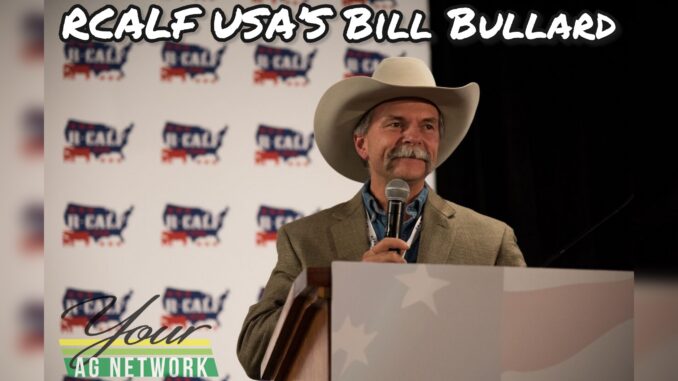
Bill Bullard, President and CEO of RCALF USA, discusses recent developments affecting American cattle producers. Including the exclusion of Brazilian beef from new tariffs, the recent USMCA news, and breaking news on federal investigations into the nation’s largest beef packers.
Q: The Trump administration recently announced increased tariffs on Brazilian products but notably excluded Brazilian beef. How does this decision impact domestic cattle producers and the broader beef trade?
A: “Over the past several years the imports from Brazil literally exploded. In fact Brazil so far this year is the number one import supplier to the United States so they surpassed Australia, Canada, New Zealand, and Mexico. This flood of imports obviously is gonna have a negative impact on cattle prices. Historically increase in imports equated with less demand for domestic cattle and so we’re disappointed that the U.S. trade representative has decided to exclude tariffs on beef import, but they have included a 25% tariff on most of the goods from Brazil. We participated in a hearing to try and get the USTR to change its position. It chose not to do so, and so we should continue to expect that we will see record volumes of imports from Brazil throughout the rest of this year and the foreseeable future.”
Q: With the USMCA set to expire, how will this reshape the beef market? Does this also present an opportunity to finally secure Mandatory Country of Origin Labeling?
A: “Well we’re pleased to see that the USMCA has not been renewed, and the reason for that is the USMCA contains the very same provisions as were in the North American trade agreement, and that was unlimited opportunities for Canada and Mexico to flood our market with both cattle and beef, and so the decision is to have a bilateral agreement between United States and Canada between United States of Mexico. We think this is a good process to go through. We want to see tariff rate quotas on the volume of beef and cattle that can be brought in from Canada and Mexico and we believe that this provides us that opportunity. As you indicated with respect to mandatory country of origin labeling, those were the two countries that have lobbied the World Trade Organization to repeal our domestic country of origin labeling laws and so by not going forward I think they’re gonna be in a better negotiating posture to get an agreement from them not to challenge our domestic laws that provide consumers with important information about where their beef is produced.”
Q: You have breaking news regarding RCALF USA’s antitrust lawsuit against the packers and a related FTC investigation. Can you provide details on both developments?
A: “The president has called for an investigation into the conduct of the packers and the conduct of retailers and that involves both the Department of Justice and the Federal Trade Commission. We believe this is absolutely essential because what we have seen over the past several years is that the retail margin has increased substantially and the packer margin has actually decreased. So we got a battle between the two titans within our industry, the beef supply chain, and it appears that they have been exercising market power and buying power in order to increase their margins. It looks like the retailers are winning. That’s why the Federal Trade Commission looking into this is so important, because the Federal Trade Commission has jurisdiction over retail prices. Then on a separate note we’ve got our private action the antitrust class action lawsuit that we have filed. We have been waiting several months for a decision or motion to achieve certification meaning that our case can proceed onward towards trial, and we just received that ruling that says that our damage claim against the four largest beef packers is allowed to continue and that’s good news for the industry.”