
By Derek Beck | Your AG Network
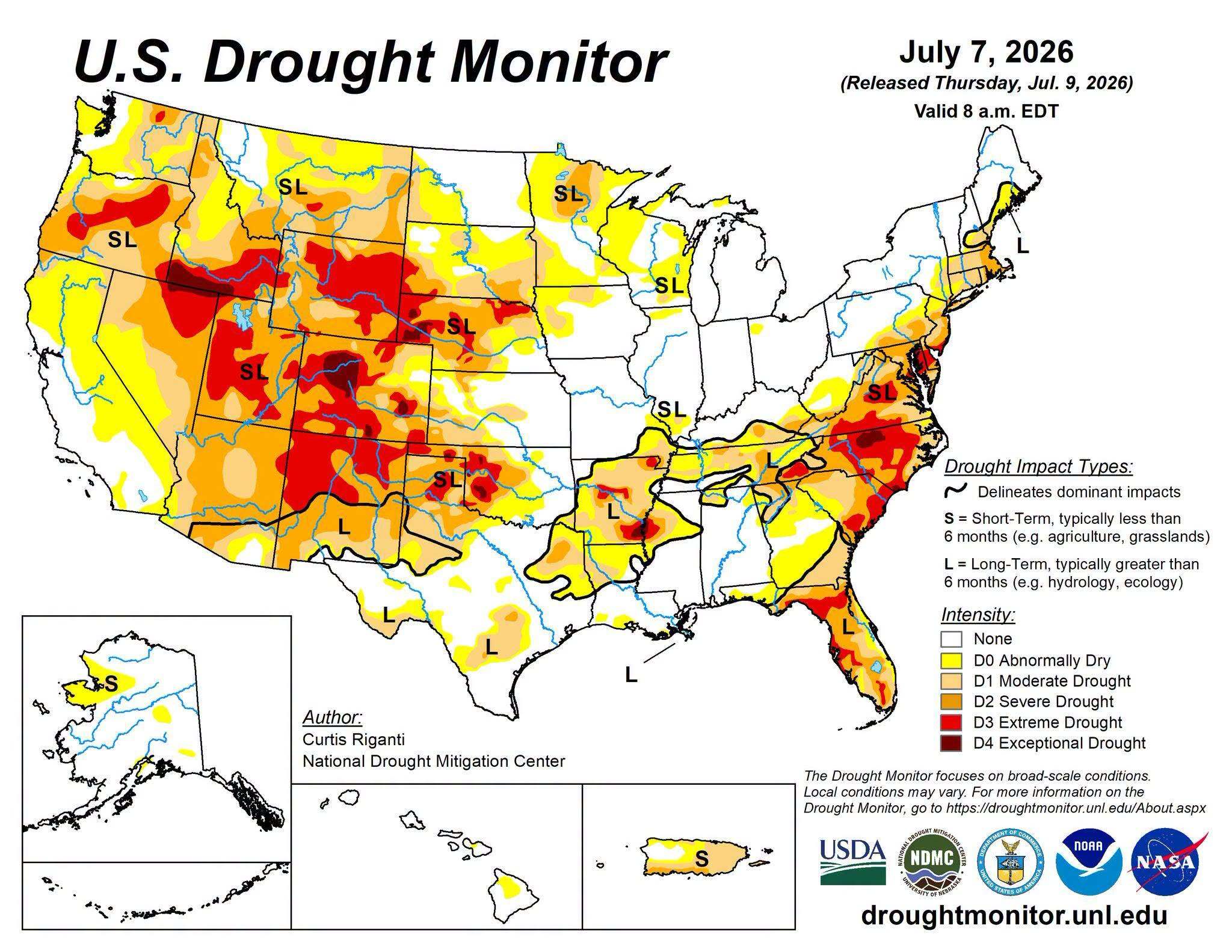
Heavy rainfall brought meaningful drought relief across parts of Iowa, southeast Minnesota and western Wisconsin during the latest U.S. Drought Monitor update, while expanding dryness continued to impact portions of Nebraska, South Dakota and Colorado.
The weekly report, released Thursday using conditions through July 7, showed a mixed picture across the nation’s agricultural heartland. Widespread rainfall of 2 to 8 inches fell across central and northern Iowa, extending into southern Minnesota and west-central Wisconsin. The moisture led to one-category drought improvements across much of the region, with isolated two-category improvements in northwest and north-central Iowa.
For producers in the High Plains, however, the outlook was less encouraging.
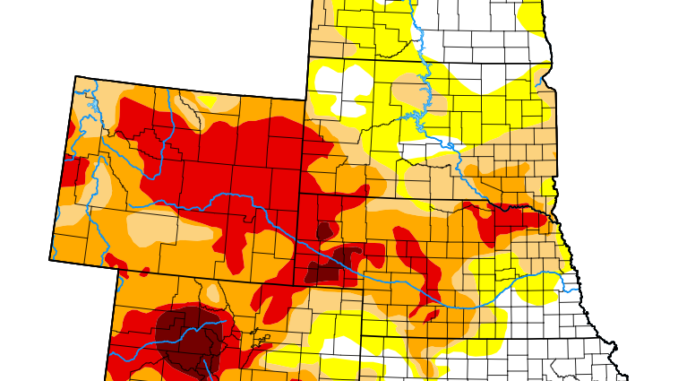
Eastern Nebraska experienced expanding areas of abnormal dryness and moderate drought as rainfall deficits and declining soil moisture continued to build. Portions of central and east-central Nebraska saw conditions worsen during the week, despite scattered thunderstorms bringing localized relief to southwest Nebraska and along the Missouri River corridor.
South Dakota also saw a split forecast. Rainfall improved conditions along the Big Sioux and Missouri River valleys in the southeast, but drought expanded across north-central and northwestern portions of the state as precipitation shortages and falling streamflows intensified.
Western Kansas was among the bright spots, where scattered thunderstorms produced localized drought improvements, particularly across northern and western portions of the state. Similar improvements were noted in northeast Colorado, southeast New Mexico and parts of west Texas.
Across the broader Midwest, temperatures averaged above normal, especially near the Great Lakes where readings ran 6 to 12 degrees warmer than average. While much of Illinois, Michigan and Wisconsin remained free of drought, new pockets of abnormal dryness developed in northeast Minnesota and Michigan’s Upper Peninsula following several weeks of below-normal rainfall.
Out West, dry conditions dominated much of the region, allowing drought to worsen across parts of Oregon, Washington, Wyoming and Colorado. Central and southwestern Colorado continued to see deteriorating conditions as multiple large wildfires burned amid low soil moisture and significant precipitation deficits. Severe to extreme drought remains entrenched across large portions of Nevada, Utah, Wyoming, Colorado, New Mexico and southern Idaho.
Nationally, scattered thunderstorms across the Great Plains produced a patchwork of improvements and degradations, while heavy rains in Arkansas, Louisiana, Kentucky and Tennessee also brought notable drought relief.
The U.S. Drought Monitor said continued rainfall will be critical across portions of Nebraska, South Dakota and the central Rockies as crops enter key reproductive stages and livestock producers continue to monitor pasture conditions through the heart of the summer growing season.